
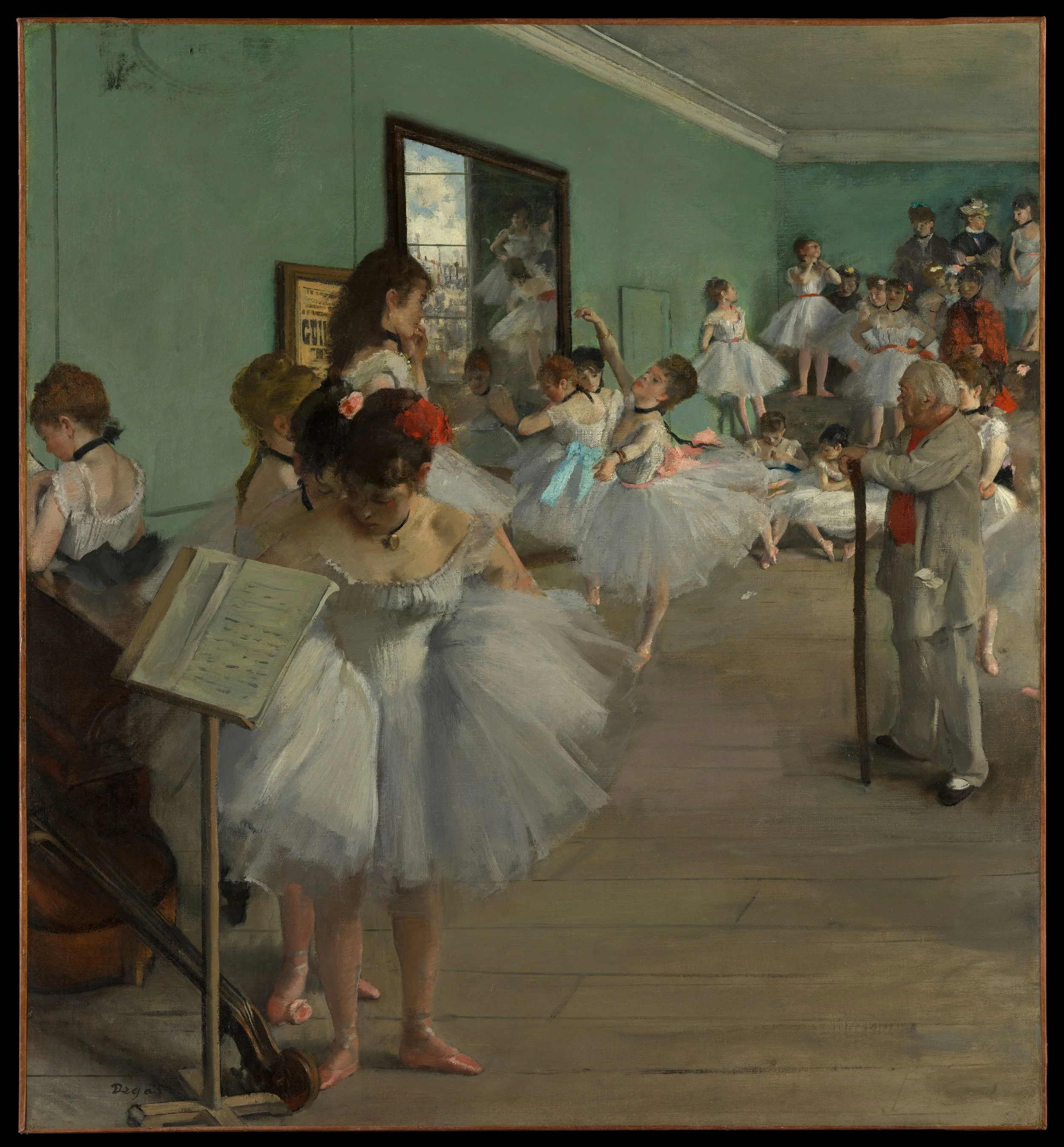
The Dance Class by Edgar Degas, 1874. Source: Metropolitan Museum of Art New York, NY, Public domain; Creative Commons Zero (CC0).
Hello,
Apologies for the radio silence from Career Tips to Go headquarters… but I have been very busy working on my debut novel, a cozy mystery set on a luxury cruise ship, The Art of Deception. The novel involves a replica impressionist masterpiece and whilst I was researching the novel, I came across a great story about Degas and two versions of the same subject. The Ballet Class, which is in the Musée d’Orsay in Paris, and The Dance Class in the Metropolitan Museum of Art in New York. They are both absolute masterpieces.
But it is the story behind them that I thought was really relevant to Career Tip readers. Because it reminded me of the question I have asked myself over the years… how good is good enough? And how do you strike a balance between doing your very best and delivering what is required?
The story goes like this. In the early 1870s, Degas was commissioned by Jean-Baptiste Faure for ballet-themed oil paintings. One of his favorite subjects, ballet dancers. This was to be a painting set in a fictional rehearsal room in the old Paris Opéra, which had been burnt down, and featuring a famous ballet master, Jules Perrot.
Degas was a perfectionist. He couldn’t quite get his first version right and started another. Long story short, they were both said to be delivered late, and letters from Degas to Fauré indicate that he apologized frequently for missed timelines. The painting in The Met was delivered in 1874, and the one in the Musée d’Orsay in 1876. According to Art Historians, Degas was under pressure to complete the version completed in 1874. But he still tinkered away on his original version and completed it in 1876.
For me, the aha moment was that they were both good enough. As I said, they are both considered masterpieces. Sometimes you just have to accept that time frames need to be met, and you can’t be a perfectionist every single time! We are all juggling deadlines, stakeholder expectations, or pressure to over‑deliver, and to do our best.
That’s certainly true of writing my novel. After months of editing my own manuscript, I have quite a lot of sympathy for Degas.
I enjoyed researching the art for the book so much that I produced a companion guide for the novel, the Art Lover’s Guide to The Art of Deception, which you can download for free. Or check out the fictional world of my luxury cruise ship, the Ocean of Dreams.
The other lesson of all of this for me is what great fun it is learning something new!
Karen